# Visible

## Introduction

The `Visible` variable controls whether an object and its children appear.

## Example

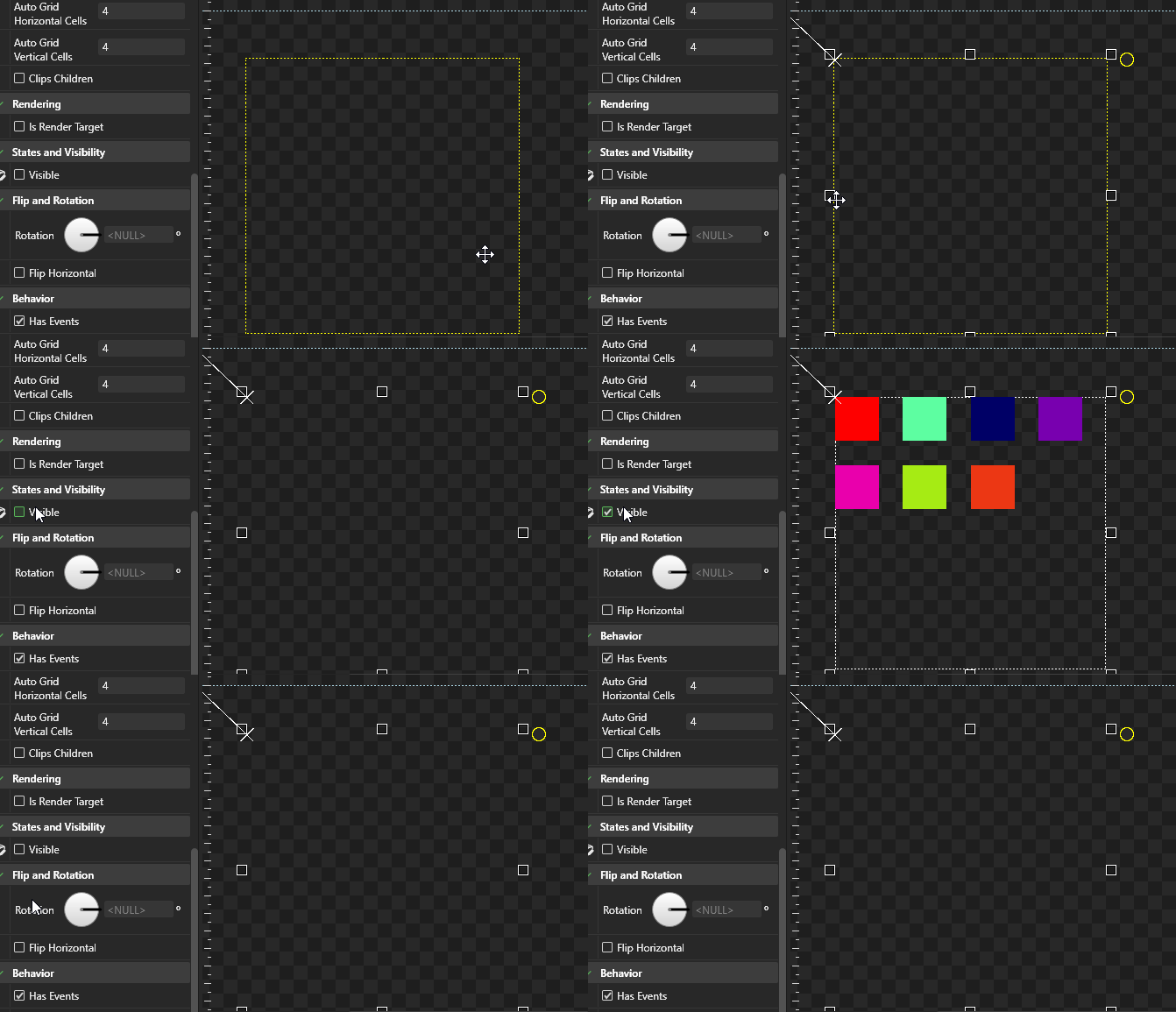
Setting Visible to false hides the selected instance.

![Visible property controls whether an instance is hidden or shown](/files/6C7HnsyxHgGggRXBlGeg)

## Parent/Child Visibility

Setting a parent's `Visible` variable to false also hides all children. Note that this does not explicitly set the Visible property to false for all children, but a child's effective visibility depends on its parent.

![A parent's Visible value controls whether children are visible](/files/lkwjmMAPXWYqoDu899yi)

## Visibility and Stacking

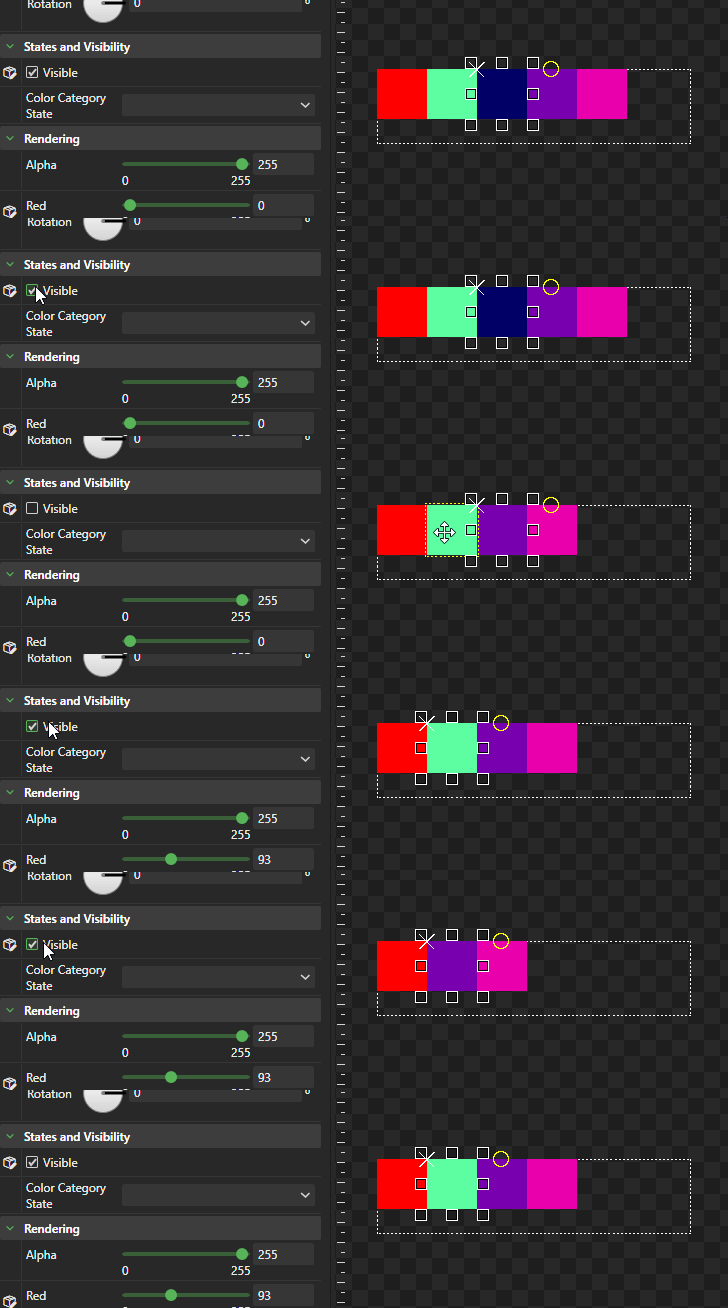
If an instance is part of a parent which stacks its children (has a `Children Layout` of `Left to Right Stack` or `Top to Bottom Stack`), then it will no longer be considered when stacking siblings if it is invisible. In other words, making an item invisible removes it from the stack.

<figure><img src="/files/cfzYOP9BKnOiKClWnufA" alt=""><figcaption><p>Invisible siblings are not considered in stacking</p></figcaption></figure>

If the stack contains children which use a `Width Units` of `Ratio`, then hiding any of the siblings results in the children with ratio width adjusting to occupy the extra space.

<figure><img src="/files/mNWgeoDypVV84gBmdYXM" alt=""><figcaption><p>Invisible siblings are not considered when calculating used space for <code>Width Units</code> of <code>Ratio</code>.</p></figcaption></figure>

## Selecting Invisible Objects

An invisible object can be selected by clicking on it in the Project tab or in the Editor tab.

<figure><img src="/files/m2z50iKMBX2oAwhv9dlN" alt=""><figcaption><p>Invisible objects can be selected</p></figcaption></figure>

Visible items are given preferential selection even if they are ordered behind invisible items.

<figure><img src="/files/EvizzyK777acklW5CQlj" alt=""><figcaption><p>The visible ColoredRectangle is selected before the invisible container</p></figcaption></figure>


---

# Agent Instructions: Querying This Documentation

If you need additional information that is not directly available in this page, you can query the documentation dynamically by asking a question.

Perform an HTTP GET request on the current page URL with the `ask` query parameter:

```
GET https://docs.flatredball.com/gum/gum-tool/gum-elements/general-properties/visible.md?ask=<question>
```

The question should be specific, self-contained, and written in natural language.
The response will contain a direct answer to the question and relevant excerpts and sources from the documentation.

Use this mechanism when the answer is not explicitly present in the current page, you need clarification or additional context, or you want to retrieve related documentation sections.