# Font

### Introduction

The Font variable sets the font family used by the text.

<figure><img src="/files/kGjIGfnJDdiVys39pCQe" alt=""><figcaption><p>Text instance using Arial font family</p></figcaption></figure>

This dropdown appears only if [Use Custom Font](/gum/gum-tool/gum-elements/text/use-custom-font.md) is set to false.

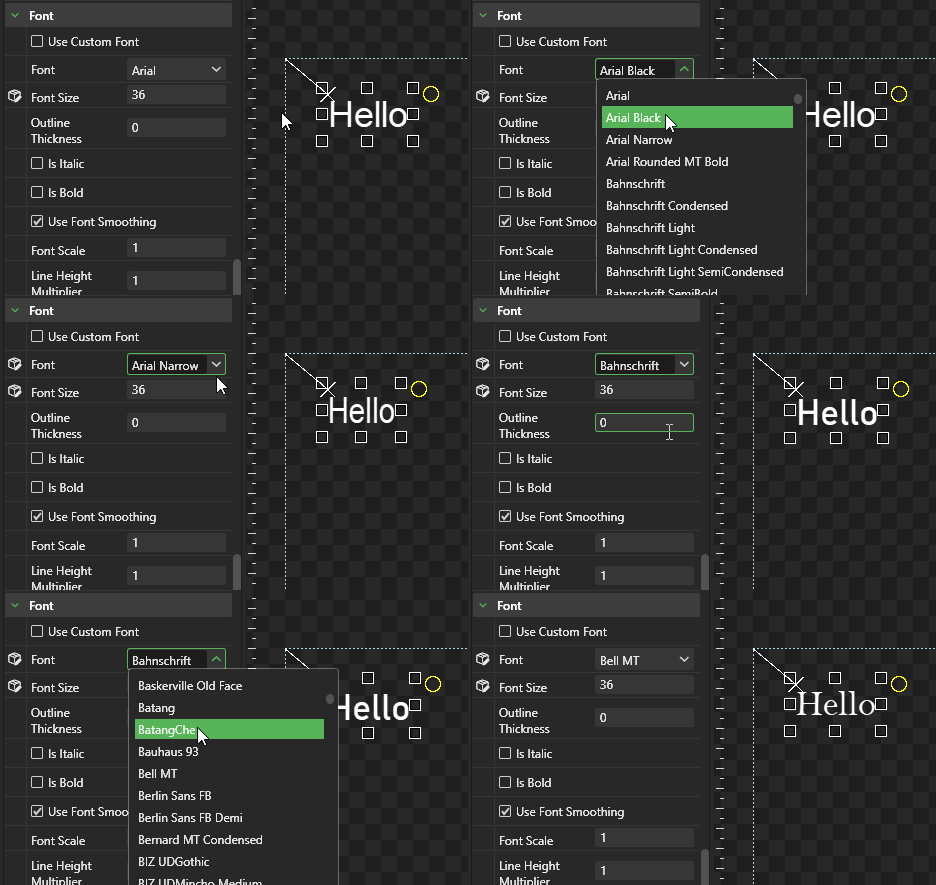
The Font dropdown has access to any font which is installed locally.

<figure><img src="/files/8WtZz4N40LYnSlJ1fmZG" alt=""><figcaption><p>Changing the font updates the appearance of the Text instance</p></figcaption></figure>

To use a font in Gum, download the font and install it by double-clicking or right-clicking on the font.

<figure><img src="/files/TvbEKMIEKGzDFFTKKKi7" alt=""><figcaption><p>Right-click Install font option</p></figcaption></figure>

### Font Generation and Font Cache

Gum performs rendering using rasterized fonts. In other words, it renders using pre-made .png files which contain all of the characters in a font.

You can view the Font Cache in your project by selecting **Content -> View Font Cache**.

<figure><img src="/files/q7x4cjpxnzR6CgWdYEua" alt=""><figcaption><p>View Font Cache menu item</p></figcaption></figure>

This folder contains all font files used by your project.

<figure><img src="/files/opTE4GjQttlDqRo2ca5g" alt=""><figcaption><p>Font files in the FontCache folder</p></figcaption></figure>

Note that each font has three files:

* bmfc - Bitmap Font Generator configuration file. This can be opened in Bitmap Font Generator to see the settings that have been used to export the other files
* fnt - Bitmap Font Generator font file. This is a text file indicating the location of each character in the matching png files. It also includes kerning pairs.
* png - This is the image file containing the letters for the font. The font may contain multiple image files if the character set or font size are large enough.

Each PNG can be opened in an image editor to view the packed characters. For example, the following shows the Arial 24 font. The blue background has been added manually to make the white characters visible:

<figure><img src="/files/T6ZQNUrf045fS06kedXK" alt=""><figcaption><p>Arial 24 font in a PNG with an added blue background for visibility</p></figcaption></figure>

#### Font Cache Generation

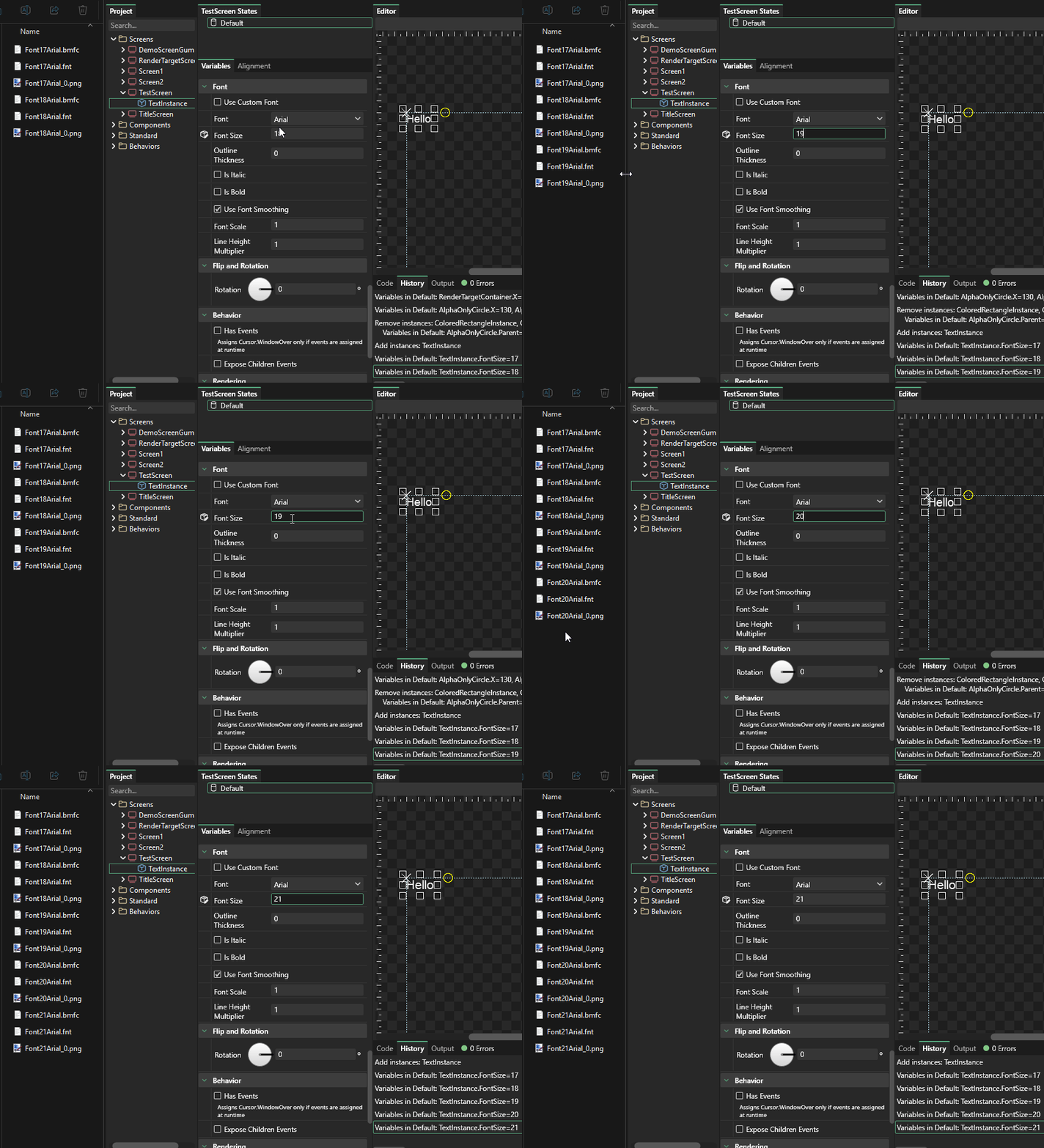
Fonts are generated as needed by Gum. This happens whenever a property changes on a Text object requiring a new font. Gum only re-generates fonts if a matching font doesn't already exist. The following animation shows new fonts being generated as a Text's Font Size is changed.

<figure><img src="/files/uzpFq7DXYqvathc1UFNm" alt=""><figcaption><p>Fonts generated as the Font Size changes</p></figcaption></figure>

Fonts are generated in response to any of the following properties changing:

* Font
* [Font Size](/gum/gum-tool/gum-elements/text/font-size.md)
* [Outline Thickness](/gum/gum-tool/gum-elements/text/outlinethickness.md)
* [Is Italic](/gum/gum-tool/gum-elements/text/is-italic.md)
* [Is Bold](/gum/gum-tool/gum-elements/text/is-bold.md)
* [Use Font Smoothing](/gum/gum-tool/gum-elements/text/use-font-smoothing.md)

### Installing Fonts

Windows Machines typically have dozens of fonts installed automatically. You may be working on a project which needs custom fonts. These fonts can be obtained on many websites including <https://www.dafont.com/> and <https://fonts.google.com/>.

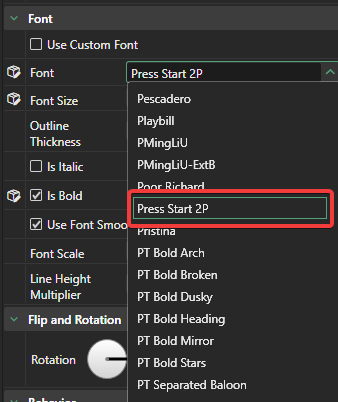
Once a font has been installed, you must restart Gum for the font to be available in the Font dropdown.

<figure><img src="/files/B2OcwqOfnuLGXgzwc9SU" alt=""><figcaption><p>Font available in the Font dropdown after being installed</p></figcaption></figure>


---

# Agent Instructions: Querying This Documentation

If you need additional information that is not directly available in this page, you can query the documentation dynamically by asking a question.

Perform an HTTP GET request on the current page URL with the `ask` query parameter:

```
GET https://docs.flatredball.com/gum/gum-tool/gum-elements/text/font.md?ask=<question>
```

The question should be specific, self-contained, and written in natural language.
The response will contain a direct answer to the question and relevant excerpts and sources from the documentation.

Use this mechanism when the answer is not explicitly present in the current page, you need clarification or additional context, or you want to retrieve related documentation sections.