# Sprite

### Introduction

Sprites are used to render a texture to the screen. Sprites are one of the most common types of FlatRedBall objects. Examples of Sprites include:

* Character graphics (static or animated)
* Backgrounds
* Particles
* Bullets

Sprites are often contained in Entities or created in code as particles.

### Sprite vs Texture

Many new developers confuse the terms Sprite and Texture so it's worth discussing the difference. A Sprite is an object that is added to an Entity which can display a texture or a portion of a texture. A Sprite can have a size, rotation, transparency, and a color tint.

A texture (technically a Texture2D) is an image which is usually loaded from a .png file. The texture has pixel data which is used by a Sprite to draw to the screen. A texture can contain a single image (such as a coin or bullet), or it can contain multiple images. When it contains multiple images it is often referred to as a *sprite sheet*.

You can think of the Sprite as something which displays texture data - like a digital picture frame. The texture is the picture that is being displayed in the digital picture frame.&#x20;

### Creating an Entity With a Sprite

When you are creating a new entity, you can check the option to add a Sprite in the **Add Entity Window**.

1. Right-click on the Entities folder
2. Select **Add Entity**
3. Check the **Sprite** option
4. Click **OK**

![Check Sprite to add a Sprite when creating a new entity](/files/JUSE3FSXOpwfeoDeA967)

### Adding a Sprite

Sprites can be added to FlatRedBall screens or entities, although most games don't include Sprites directly in screens. To add a Sprite to an entity:

1. Create or select an existing entity or screen
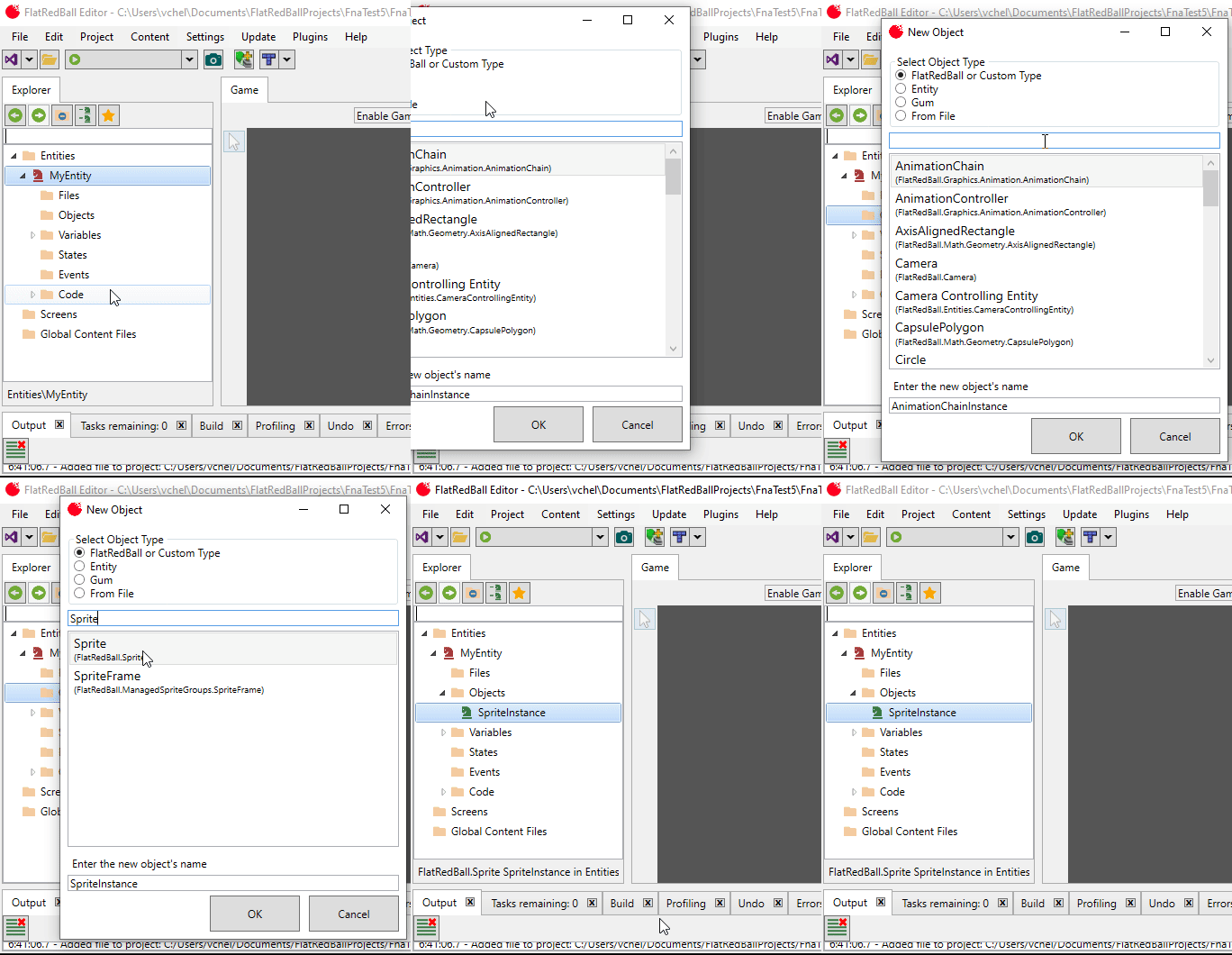
2. Right-click on the **Objects** node
3. Select **Add Object**
4. Select the **FlatRedBall or Custom Type** category
5. Select the **Sprite** type
6. Click **OK**

<figure><img src="/files/Fe7UJsibH5sdLfv0JBlO" alt=""><figcaption><p>Right-click -> Add Object to add a Sprite to an existing entity</p></figcaption></figure>

Entities often contain a Sprite for their main visuals. Some entities may have multiple sprites for visuals. For example, an Enemy may have the main SpriteInstance for its body and a ShadowSprite for the shadow.

<figure><img src="/files/03AcNkmr3NGEmdsyQUuu" alt=""><figcaption><p>Enemy entity with two Sprites</p></figcaption></figure>

### Sprite Texture

Sprites usually display textures, which are created from image files such as .png files. To add and display a texture on a Sprite:

1. Create a Sprite in a screen or entity as shown above
2. Find a .png which you would like to use
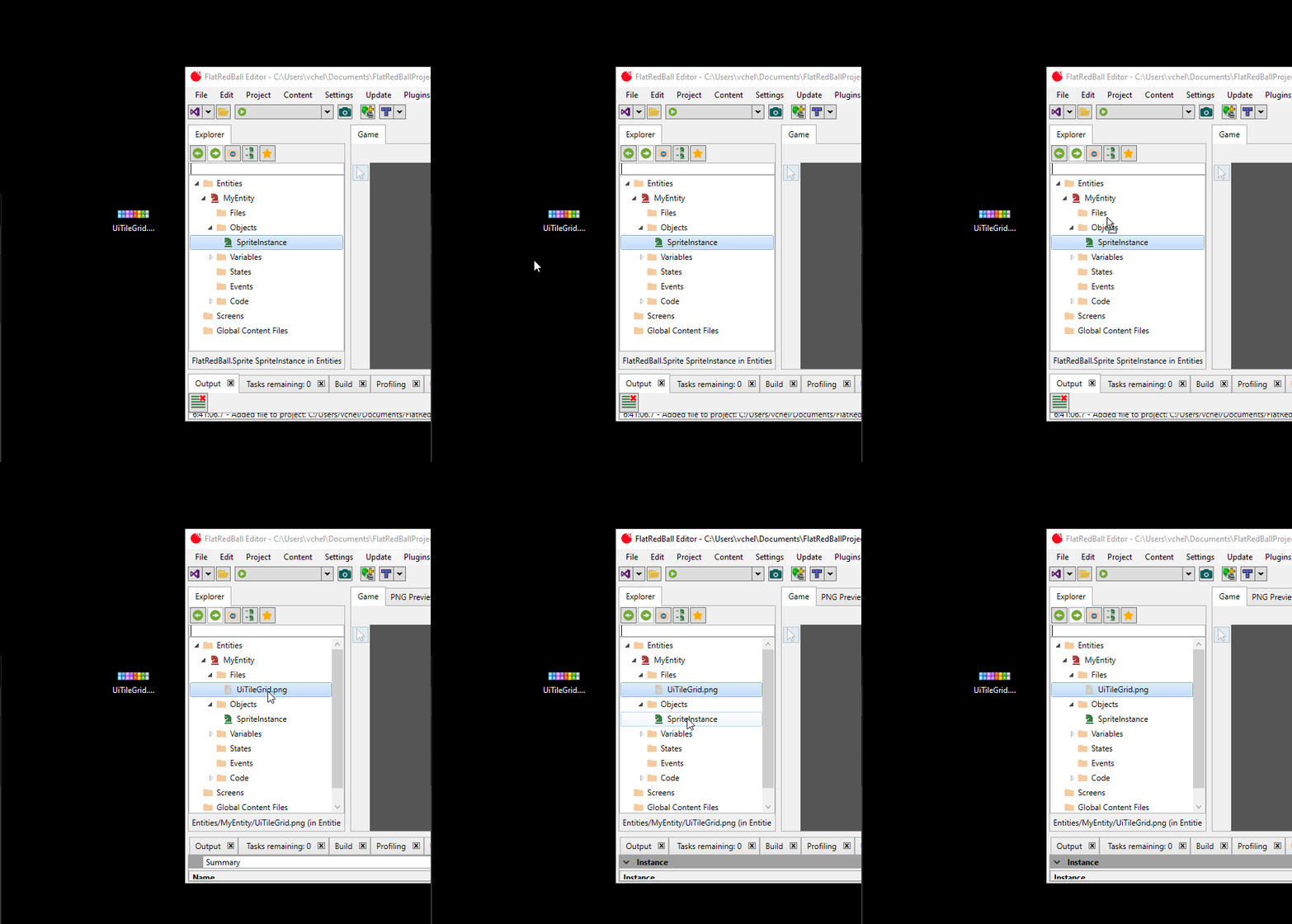
3. Drag+drop the .png file onto your screen or entity's **Files** folder in FlatRedBall
4. Select the Sprite in the same screen or entity with the newly-added file
5. Change its **Texture** property to the newly-added file

<figure><img src="/files/qtSJTp5O59ZQ5LWMRvb3" alt=""><figcaption><p>Drag+drop a Texture onto a Sprite to set its Texture property</p></figcaption></figure>

For more information about working with textures, see the [Texture2D page](/flatredball/glue-reference/files/file-types/texture2d.md).

Textures can also be assigned using the Texture dropdown in the Variables tab.

<figure><img src="/files/n3GEaTE1QvWdbbn9spuD" alt=""><figcaption></figcaption></figure>

PNGs that are in the same entity or screen's Files folder appear in the dropdown. PNGs which are in the base entity or screen's Files folder also appear in the dropdown on Sprites in the derived screen or entity.

<figure><img src="/files/AxsZkXcltwMEdiVtnCsX" alt=""><figcaption></figcaption></figure>

Files in Global Content Files can also be used, but they must first be added to the Entity as well. For more information see the section on [Shared Files](/flatredball/glue-reference/files.md#shared-files).

### Animations

Sprites can display animations by referencing a .achx file.

To reference an Animation, the first step is to have a .achx file in the same Entity or Screen as your Sprite.

To add a new .achx file, see the [Animation Chain List (.achx)](/flatredball/glue-reference/files/file-types/glue-reference-animationchainlist.md) page.

Once you have an .achx file, you can add the Animation by drag+dropping the .achx onto the Sprite.

<figure><img src="/files/TNl42GhQdRPlHS8Iuz8S" alt=""><figcaption><p>Drag+dropping an .achx file onto a SpriteInstance to assign its AnimationChains variable</p></figcaption></figure>

Alternatively, you can change the Animation Chains property in the Variables tab.

<figure><img src="/files/xba7wH1jMHUB0YxHqvXI" alt=""><figcaption><p>Setting AnimationChains and CurrentChainName on a Sprite using the Variables tab</p></figcaption></figure>

### Set Collision From Animation

Sprites can automatically apply the collision from their AnimationChains to their parent Entity. For more information, see the [Animation Shapes and Collision](/flatredball/glue-gluevault-component-pages-animationeditor-plugin/animationeditor-collision.md) page.


---

# Agent Instructions: Querying This Documentation

If you need additional information that is not directly available in this page, you can query the documentation dynamically by asking a question.

Perform an HTTP GET request on the current page URL with the `ask` query parameter:

```
GET https://docs.flatredball.com/flatredball/glue-reference/objects/object-types/glue-reference-sprite.md?ask=<question>
```

The question should be specific, self-contained, and written in natural language.
The response will contain a direct answer to the question and relevant excerpts and sources from the documentation.

Use this mechanism when the answer is not explicitly present in the current page, you need clarification or additional context, or you want to retrieve related documentation sections.